20-minute fit review
We review the repeat cycle and most time-consuming step, then identify whether the workflow is a fit, needs consultation, or should not be automated.
Service · Operations automation
For teams repeatedly managing event and program sign-ups. We preserve source responses and connect format cleanup, duplicate review, round-based rosters and messages sent only after operator approval.
For the first review, tell us the file type, repeat cycle and slowest step. No original files, contact lists or API keys.
We start without customer source data. Paid work begins only after scope, timing, and price are confirmed in writing.
We review the repeat cycle and most time-consuming step, then identify whether the workflow is a fit, needs consultation, or should not be automated.
Remote delivery within 3 business days: one PDF plus a 20-minute walkthrough covering the current workflow, input and header-role mapping, automation and human-review boundaries, exception and approval rules, verification criteria, implementation scope, schedule, and fixed estimate.
The diagnostic fee is fully credited toward a follow-on implementation contract. Time savings are not guaranteed before comparable before-and-after measurement.
The roster pilot tests two real operating runs. Settlement promises one delivered review period, not a product or connector.
Two runs with normalized rosters, review lists, rules, a processing proof file (including input/output hashes), and a comparable time record.
We manually reconcile one period and deliver missing-cost, fee, refund-loss, and negative-margin candidates in a review CSV.
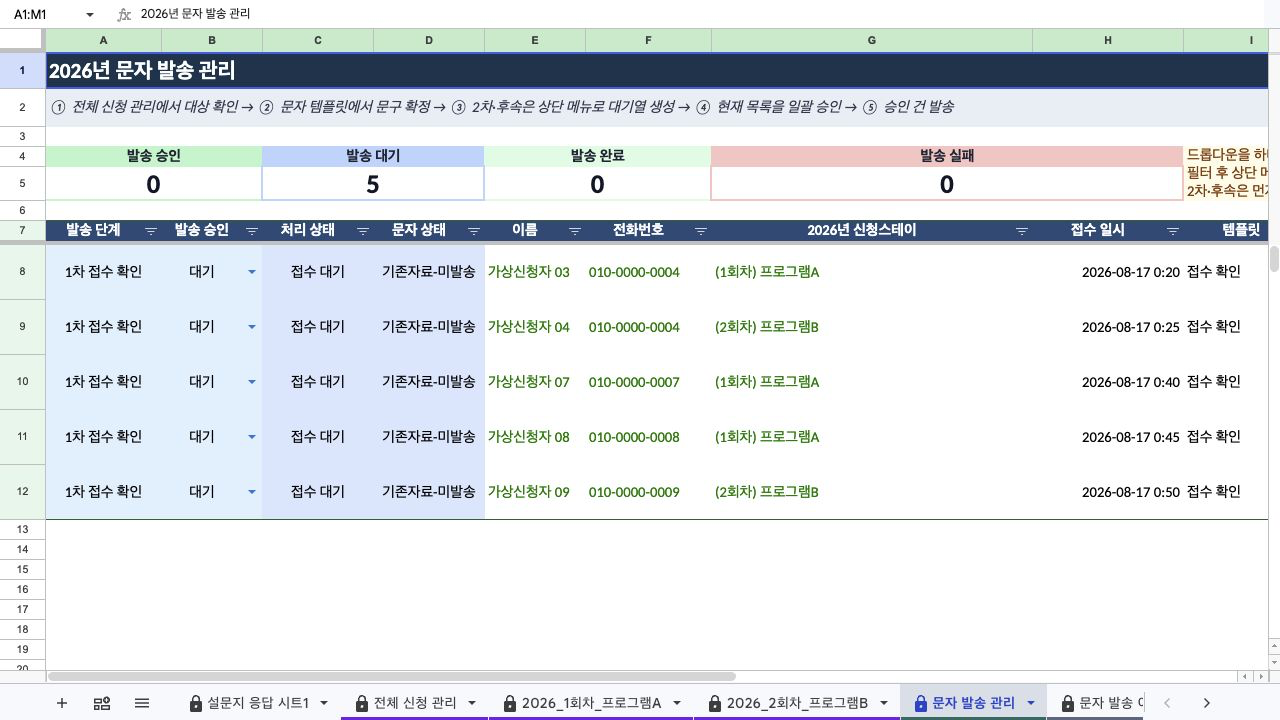
Source responses stay intact while operational rosters and review cases are organized automatically. Outbound messages are sent only after an operator reviews and approves them.
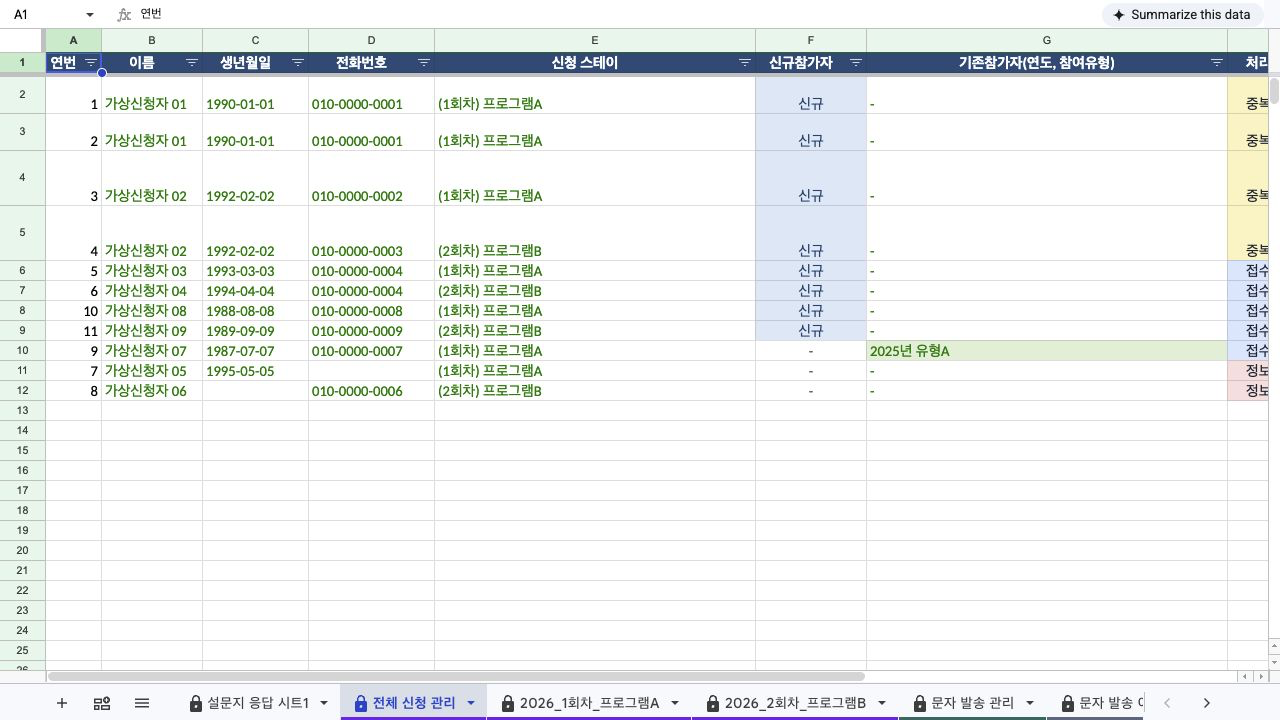
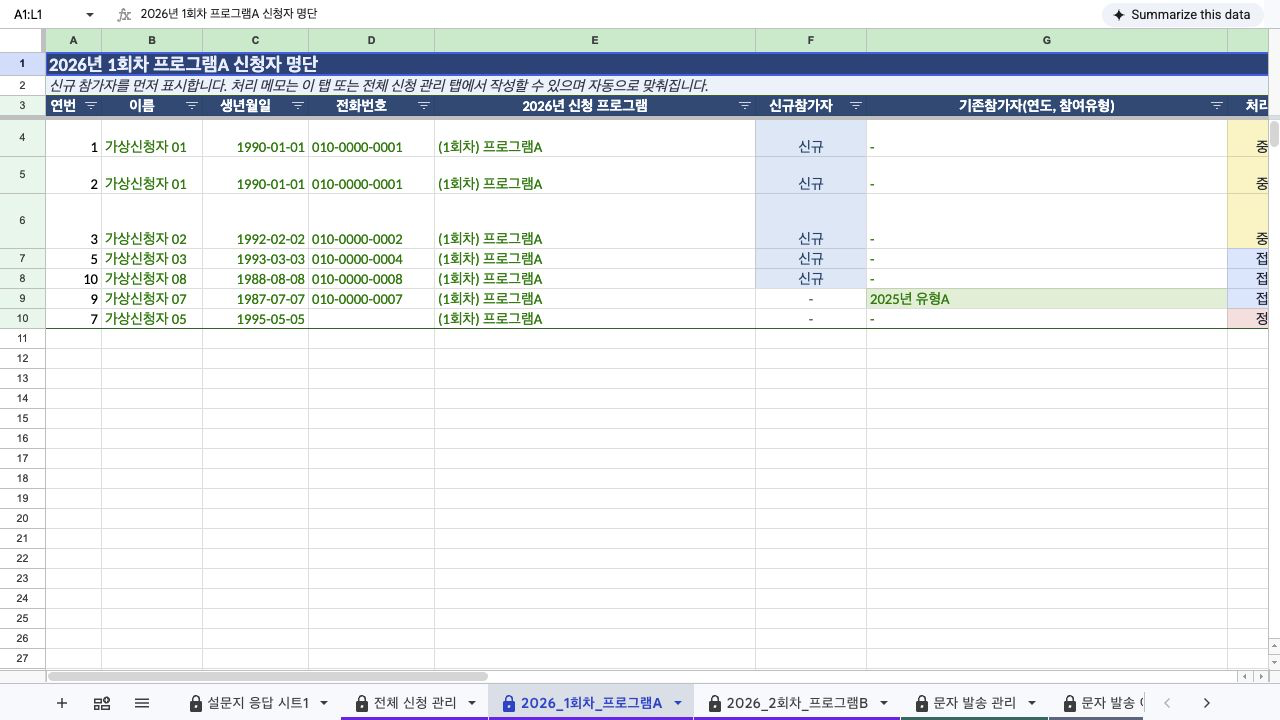
The response tab stays read-only while separate operations tabs are generated.
Formats are normalized; likely duplicates are not deleted but sent to human review.
New and returning status plus manual notes are preserved across each roster.
The remote delivery path and receipt of a live test message have been confirmed. Messages are not sent before approval, and failed messages are not retried automatically.
We first review the current form and decision rules, then agree on header mappings, review criteria, and approval steps with the operator.
To protect privacy, these screens apply the same operating rules to fictional applicants.